Home/Academy/Outage · Turnaround · Shutdown Planning Course
Outage · turnaround · shutdown planning · $199 · live on Zoom + recordings · on site for teams

Plan a shutdown that starts up on time.

Eight modules on planning and controlling a turnaround, outage or shutdown: scope challenge and freeze, work packages and drawing markups, the T-minus milestone plan, the Primavera P6 shutdown schedule, day / night manpower, readiness reviews, daily progress reports and S-curves — taught on a real 16-day heavy-equipment outage package and real turnaround documents, with client names removed.

$199USD · one-time · 8 live modules · recordings · milestone plan, worklist, work package, schedule and daily report templates
Scope freeze & change controlWork packages & markupsP6 shutdown scheduleDay / night manpowerDaily reports & S-curves
Who it is for

For the person who will be asked "are we on schedule?" at 6 a.m. every day of the outage.

A turnaround compresses a year of maintenance into weeks, with hundreds of people and a start-up date the whole business is watching. This course teaches the planning and control system that keeps it honest — from the first worklist to the last daily report — the way we deliver it on heavy-equipment outages and plant shutdowns.

  • Turnaround, outage and shutdown planners and schedulers
  • Maintenance planners stepping up to multi-week events
  • Project-controls staff moving into operating plants, utilities, mining and terminals
  • Supervisors, coordinators and TA leads who own a scope area
  • Contractors' planners who must deliver a schedule and daily reports to an owner
What you will be able to do
Build the worklist and freeze itCollect scope from every source, challenge it, freeze it and control changes.
Write work packagesSteps, crews, hours, isolations, permits, lifts and the marked-up drawings.
Schedule it in P6Shutdown, execution and start-up logic, shift calendars, critical path, frozen baseline.
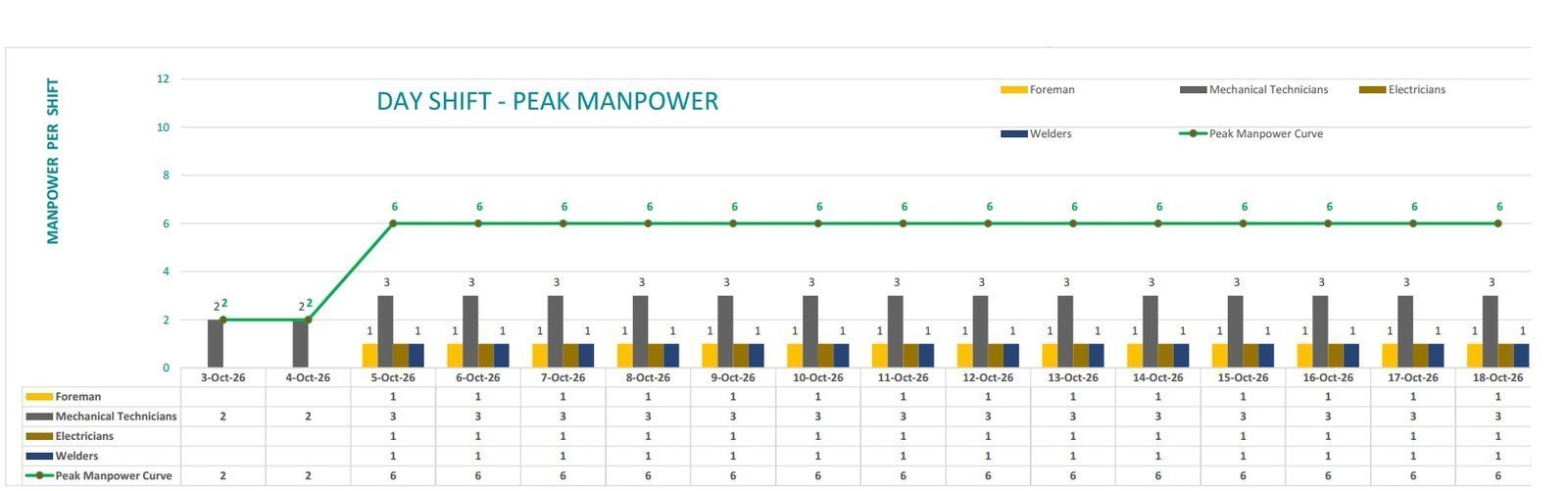
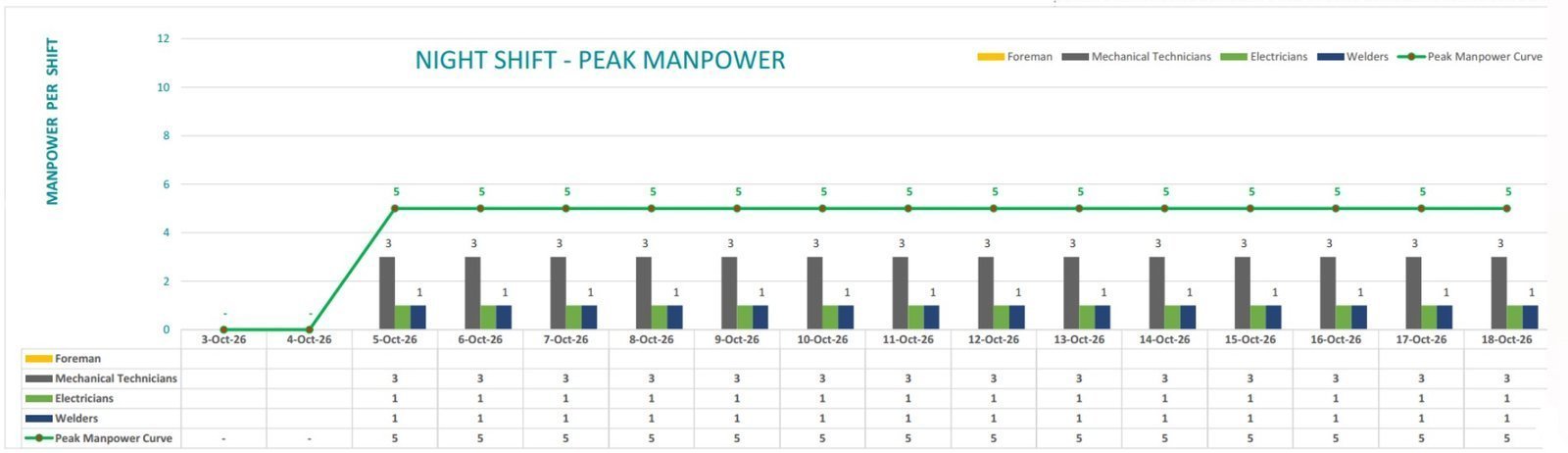
Plan the manpowerDay / night crews, peaks and valleys, the histogram and the levelling decisions.
Run readiness reviewsT-90 / T-60 / T-30 checks that decide whether you are actually ready.
Control executionShift updates, daily reports, S-curves, SPI and the recovery conversation.
Curriculum

Eight modules, one case study, a complete package at the end.

You work the whole course on one case: a 16-day heavy-equipment outage with day and night shifts. By module 8 you have built the milestone plan, the worklist, work packages, the P6 schedule, the manpower plan and the daily report — the same package we deliver to clients.

Module 1

Turnaround fundamentals and the milestone plan

  • Why turnarounds overrun: scope growth, late packages, discovery work, no control cycle
  • The TA lifecycle and the T-minus milestone plan (T-12 months to start-up and close-out)
  • Roles: TA manager, planner, scheduler, cost, QA, operations, contractors
  • Governance: readiness reviews and the decisions each one must make
Module 2

Scope development, challenge and freeze

  • Worklist sources: inspection, PMs, reliability, projects, operations
  • Scope challenge: the questions that remove work safely
  • Scope freeze, change control and the "discovery" budget
  • Long-lead items and the procurement path
Module 3

Work packages and drawing markups

  • Work package content: job steps, crews, hours, isolations, permits, lifts, scaffolding, inspections
  • Drawing markups — P&IDs and isometrics marked for isolation, blinds, spades and scope
  • Contractor packages and the handover to execution
  • Package quality checks before the schedule is built
Module 4

Building the shutdown schedule in P6

  • WBS and activity coding for a turnaround; shift calendars (day / night)
  • Logic for shutdown, execution and start-up sequences
  • Durations, crews and resource loading; critical and near-critical paths
  • Baseline Lock: build → link → PO ETA → freeze, and the baseline you will be measured against
Module 5

Manpower, shifts and logistics

  • Crew sizing from the loaded schedule; peaks and valleys by craft
  • Day / night shift plans and the manpower histogram the client expects
  • Cranes, scaffolding, laydown, tool cribs, camps and transport
  • Levelling: what to move, what to split, what to add
Module 6

Pre-turnaround readiness

  • Readiness reviews (T-90, T-60, T-30): what must be true before the shutdown
  • Kitting, pre-fabrication, staging and contractor mobilisation
  • Safety planning and the stats you track from day one
  • Communication plan, meeting cadence and the daily report format
Module 7

Execution control: progress, S-curves and the daily report

  • Shift-by-shift progress updates and what to do with discovery work
  • Daily progress report (day and night), look-aheads and the decision log
  • S-curves, SPI and the recovery conversation when the curve bends
  • Dashboards for leadership: one page, the right numbers
Module 8

Start-up, close-out, lessons learned and the capstone

  • Start-up sequencing and the handover to operations
  • Close-out: as-built schedule, KPIs (duration, cost, safety, quality), lessons learned
  • Capstone: build a 16-day outage schedule, manpower plan and daily report on our case study
  • Presenting the package to a client or TA manager
Shutdowns we planned

What the schedule looks like when it becomes work.

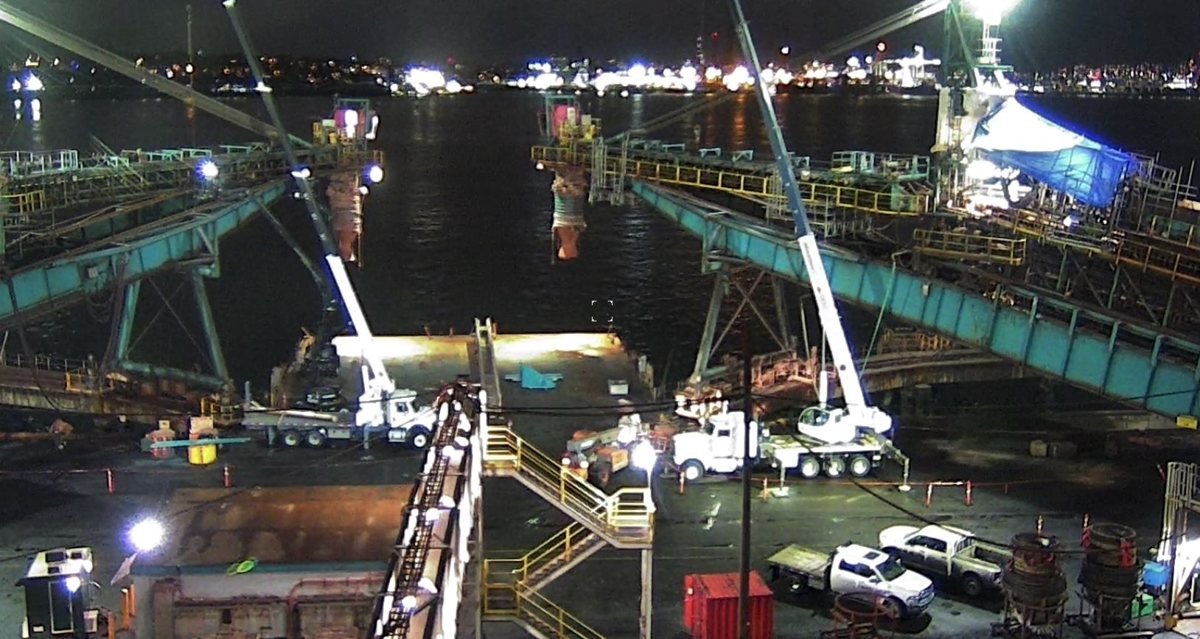
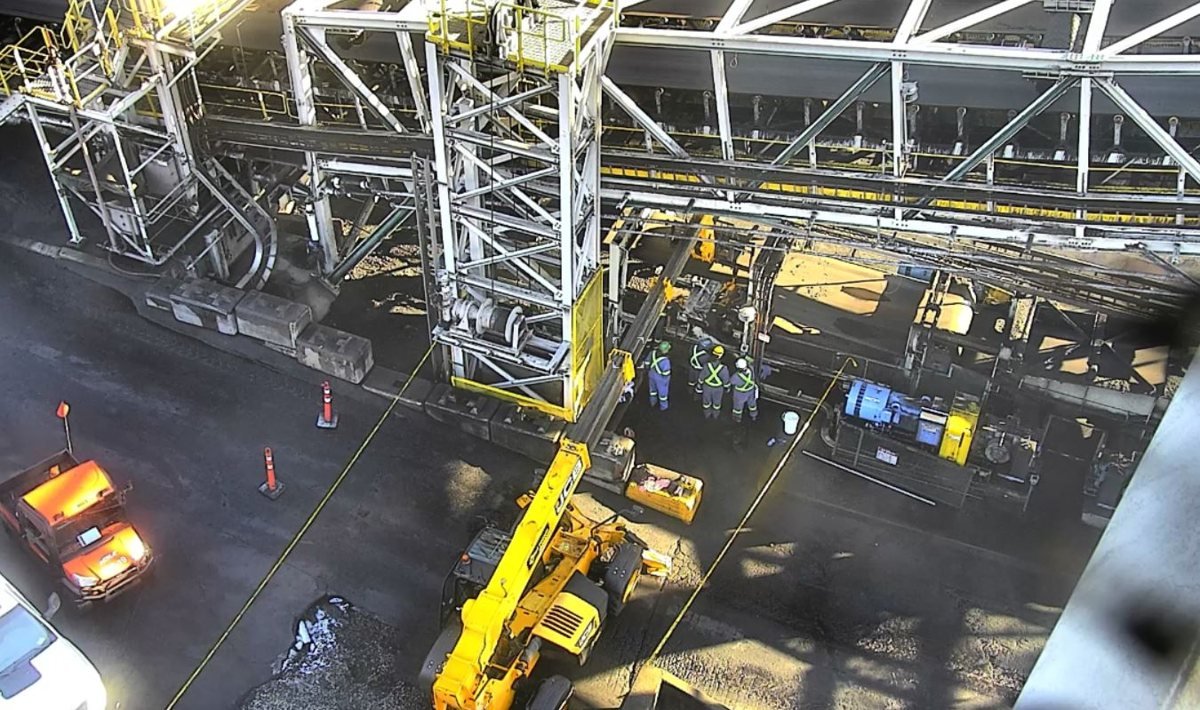
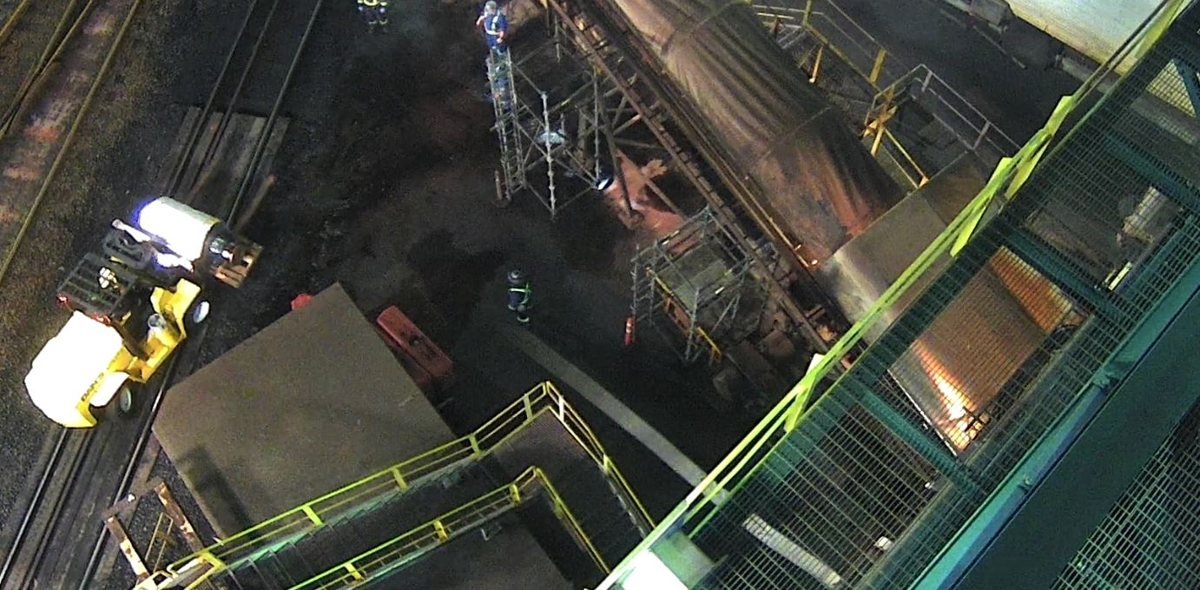
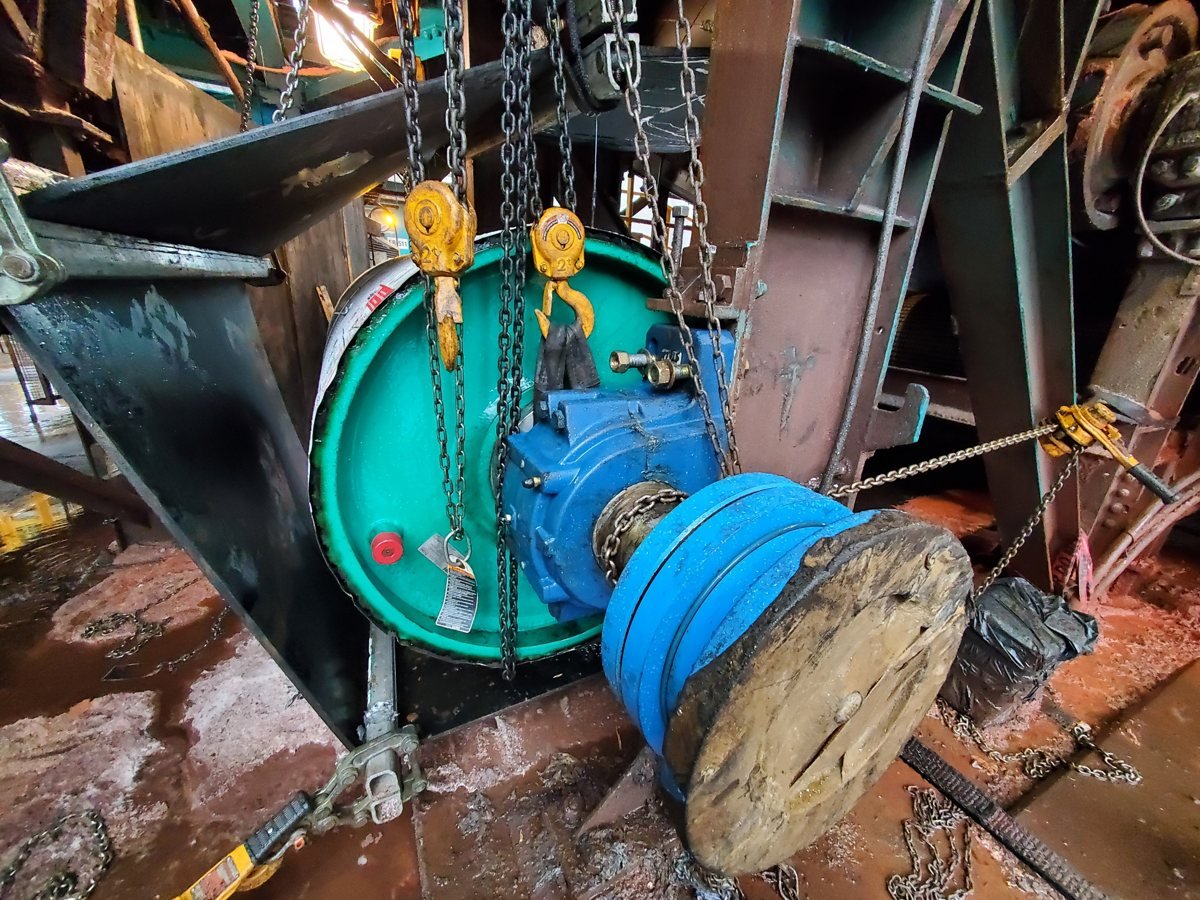
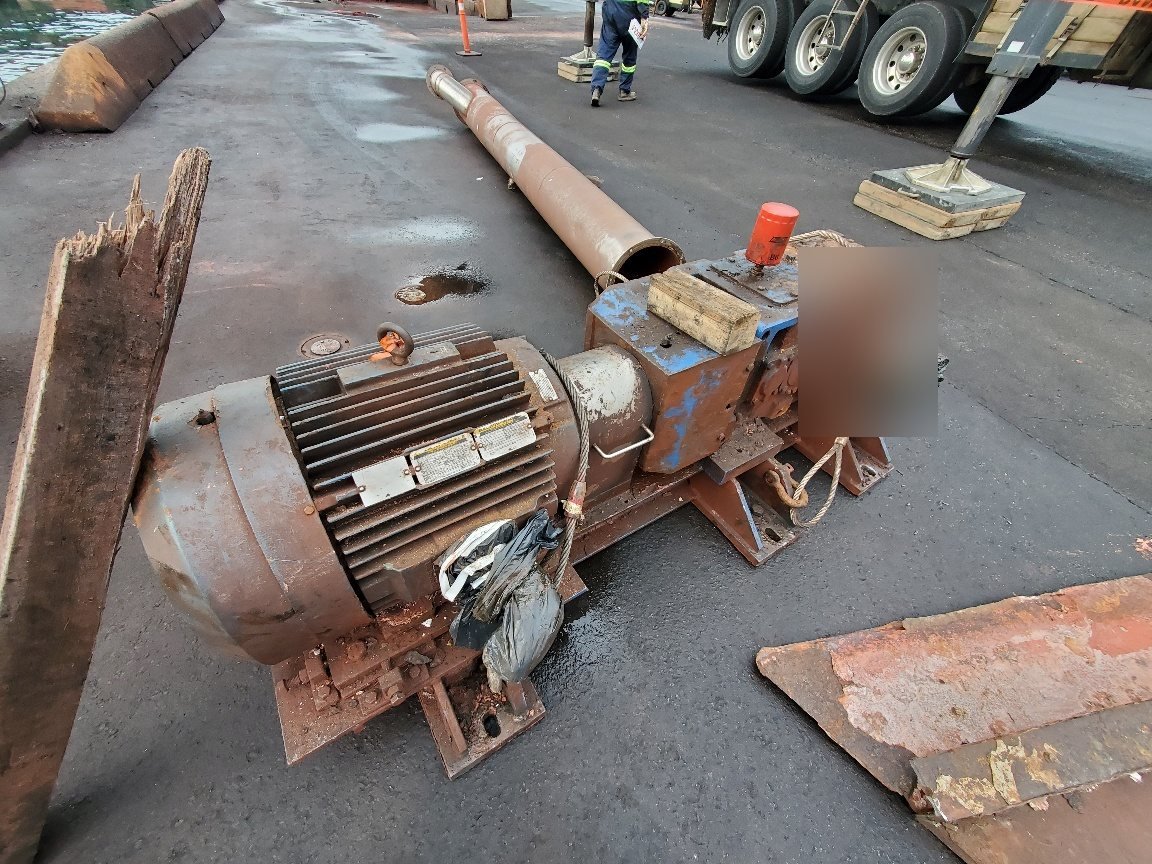
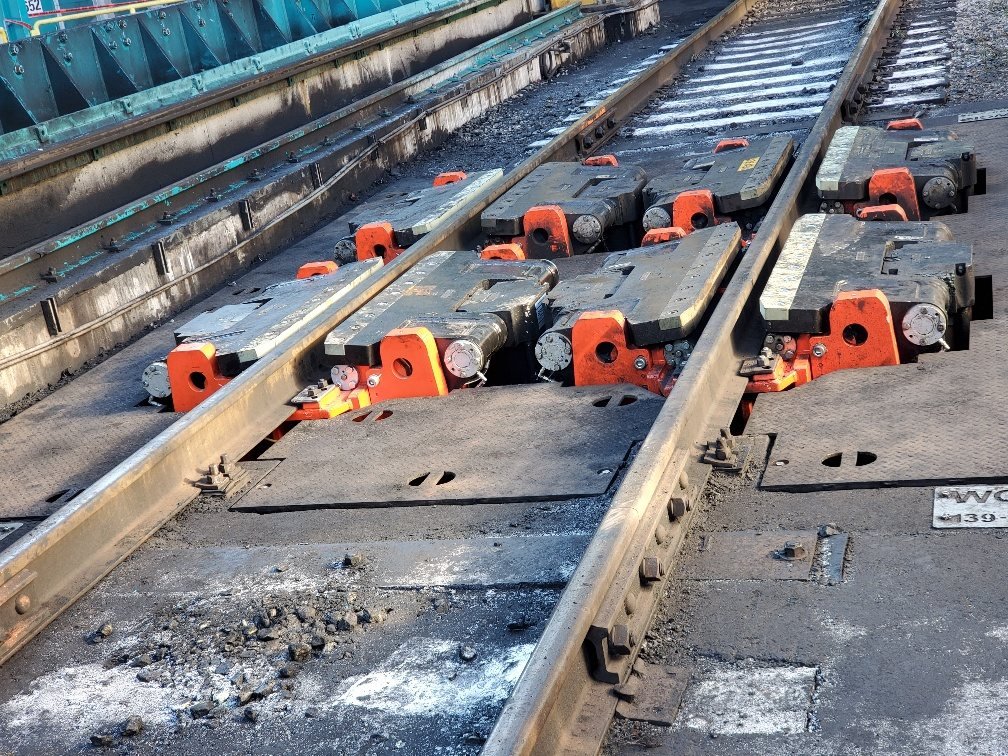
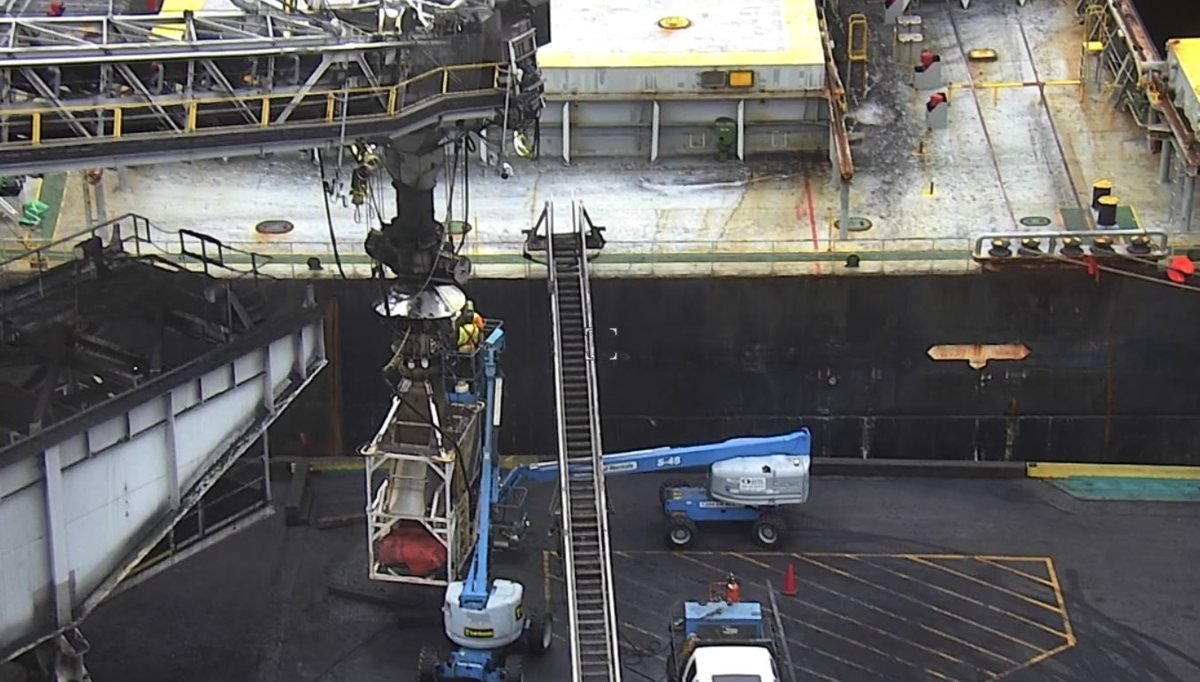
Multi-day shutdowns at a bulk-handling terminal: belt and drive replacements on the conveyor system, stacker and ship-loader work, trimmer and spout changes, bearing work on the rail-car dumper. Company identifiers blurred, audio removed.
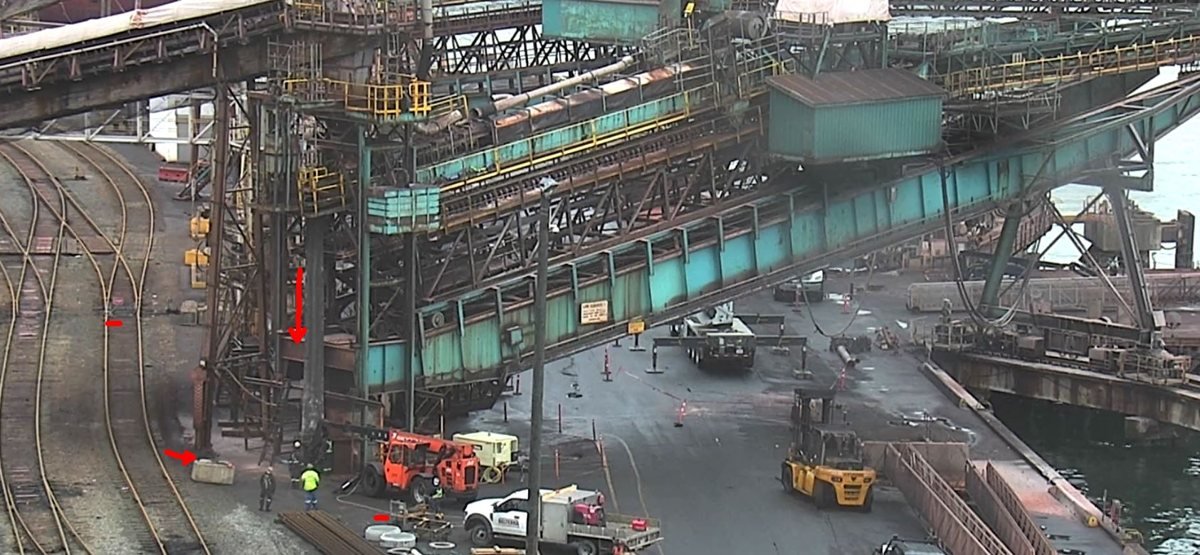
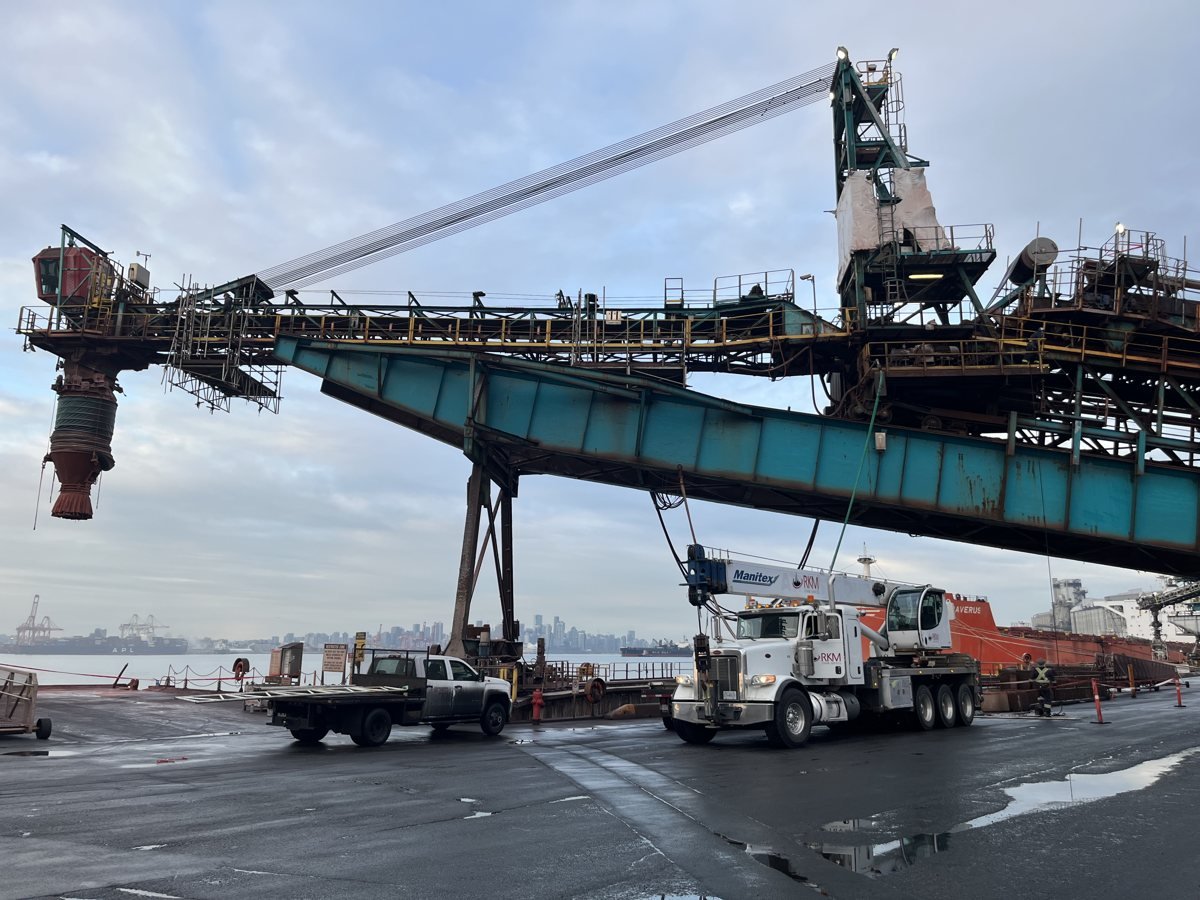
Belt changeConveyor belt change — crane picks and crew on the gallery · 20s
SiteTerminal overview — conveyors, berths and stockpiles · 18s
Ship-loaderShip-loader belt replacement · 16s
StackerStacker belt replacement over the stockpile · 18s
BerthShip-loader trimmer replacement at the berth · 18s
DriveConveyor drive replacement by crane · 18s
RailRail track works in the dumper yard · 18s
Night shiftNight shift on the belt change · 18s
Conveyor gallery and transfer tower during a daylight shutdownMobile crane lifting a conveyor truss sectionStacker boom over the stockpile during belt replacementNight work at the berth under tower lightsCrane set-up for bearing replacement seen from the galleryYard access and conveyor line prepared for the shutdownStacker structure and walkway before the belt pullNight-shift crew working on the conveyorReplacement pulley rigged and staged for installationDrive motor staged on a pallet ahead of the change-outRail clamps staged for track works in the dumper yardShip-loader trimmer work seen from above the berth
Real turnaround documents

The documents behind a turnaround — redacted, and yours as templates.

Process maps, fact sheets, dashboards and daily reports from real turnarounds and outages, with client, site and personal identifiers removed. Each one becomes a template you take home.

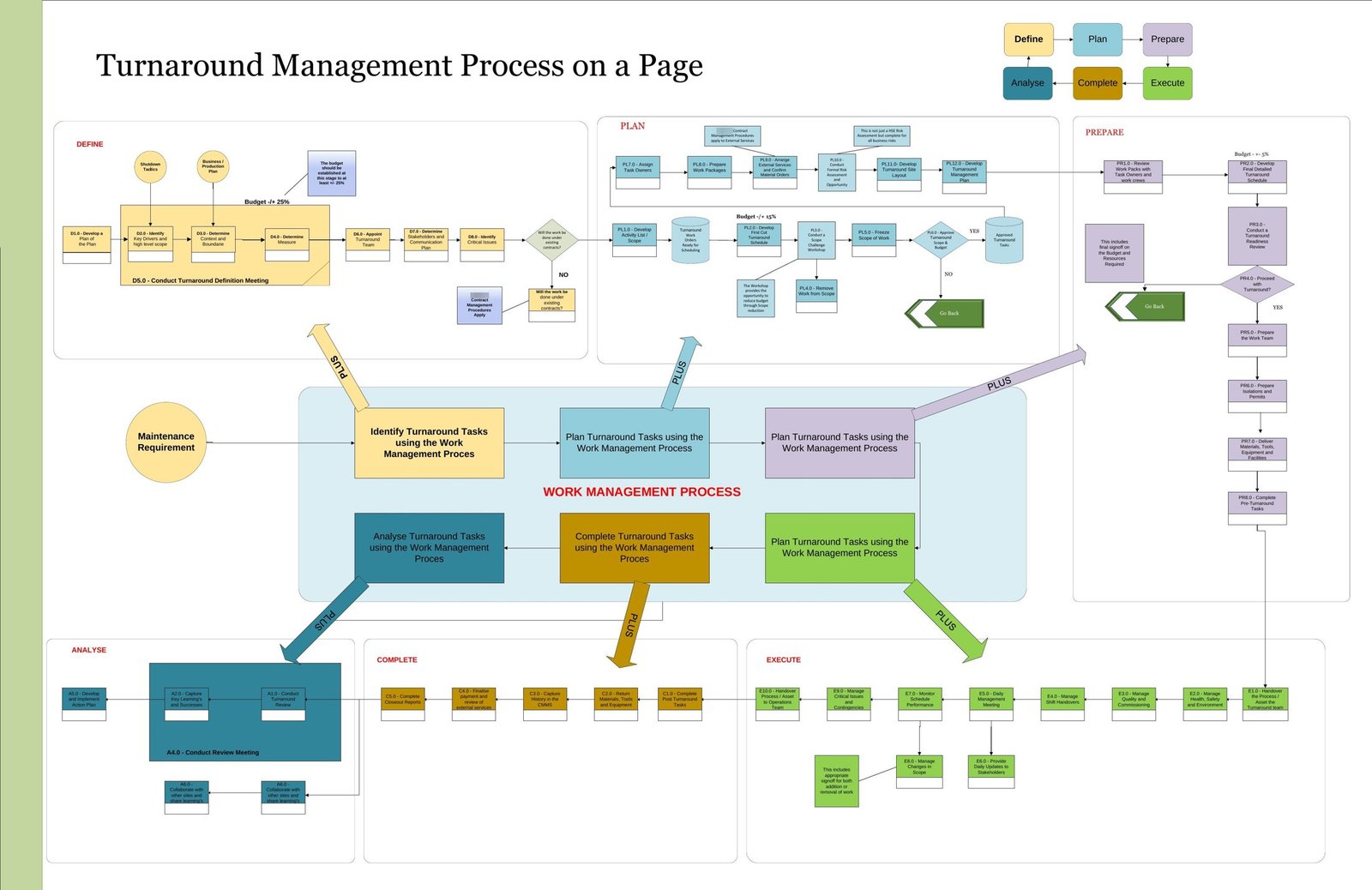
Turnaround management process map — client names removed
Turnaround management process mapThe core milestone path: scope → packages → schedule → readiness → execution → close-out.
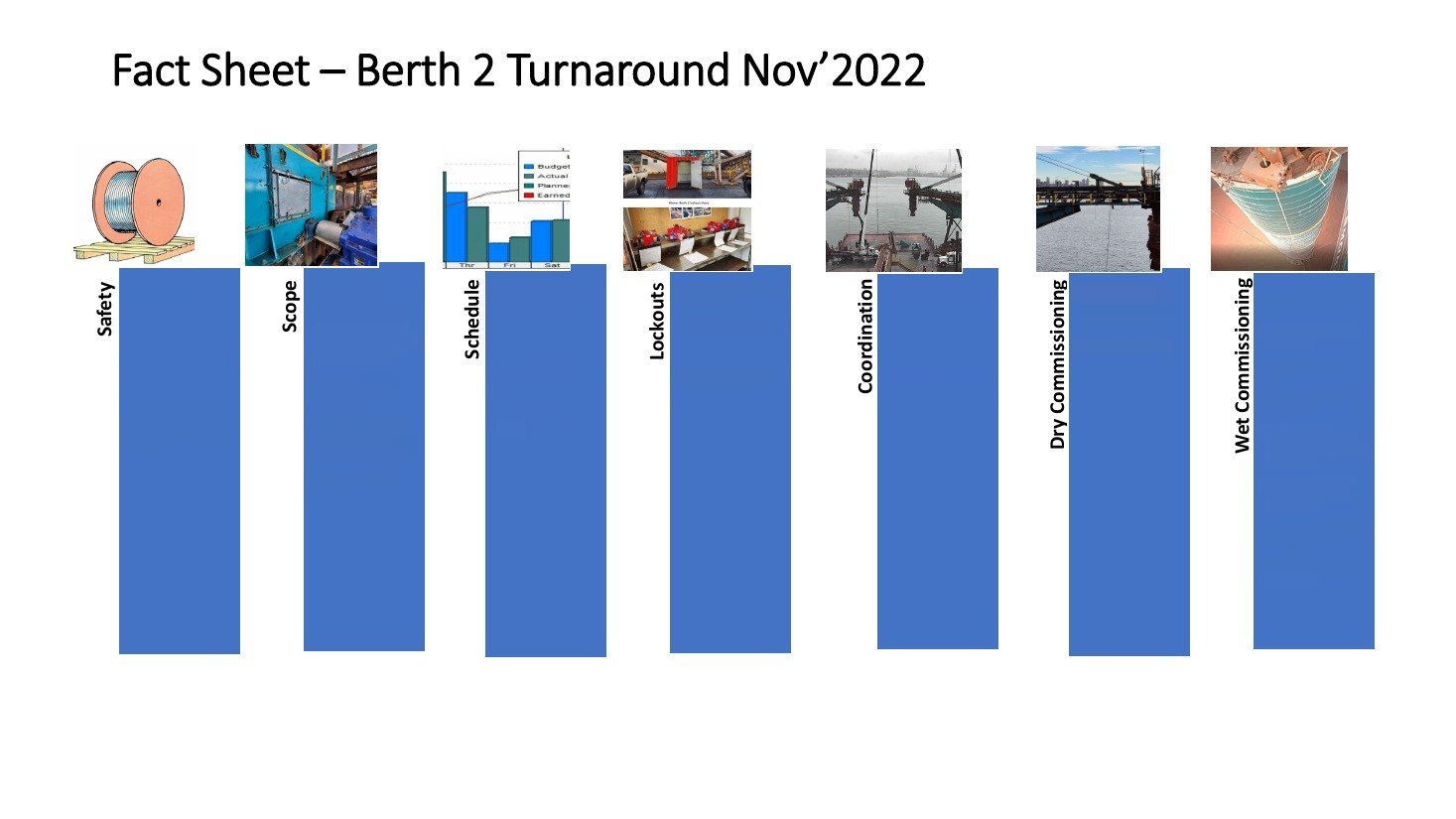
Turnaround fact sheet — client names removed
Turnaround fact sheetOne page the whole site reads: dates, scope headline, crews, safety, key risks.
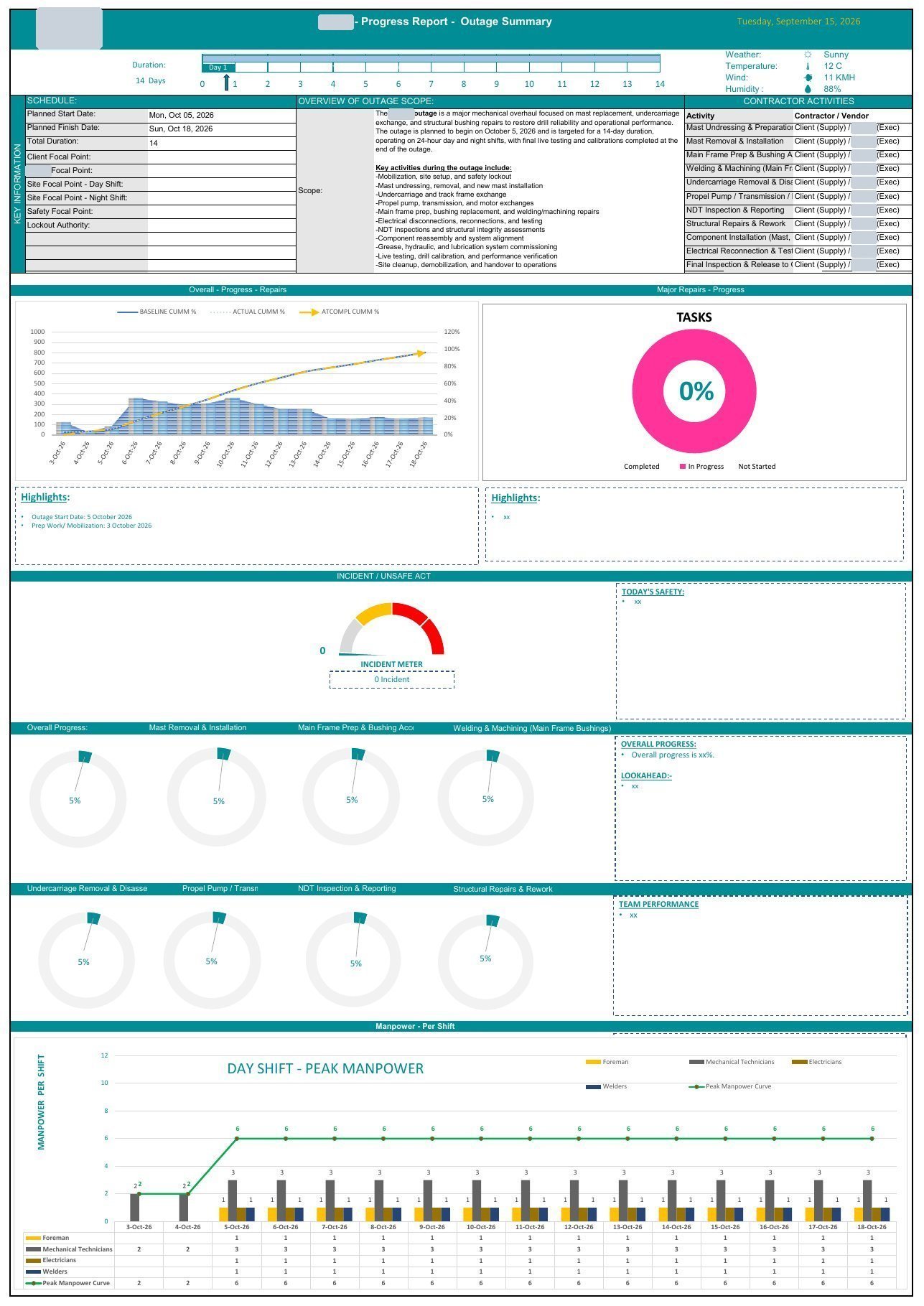
Outage schedule dashboard — client names removed
Outage schedule dashboardProgress, critical path status and manpower on one page for the morning meeting.
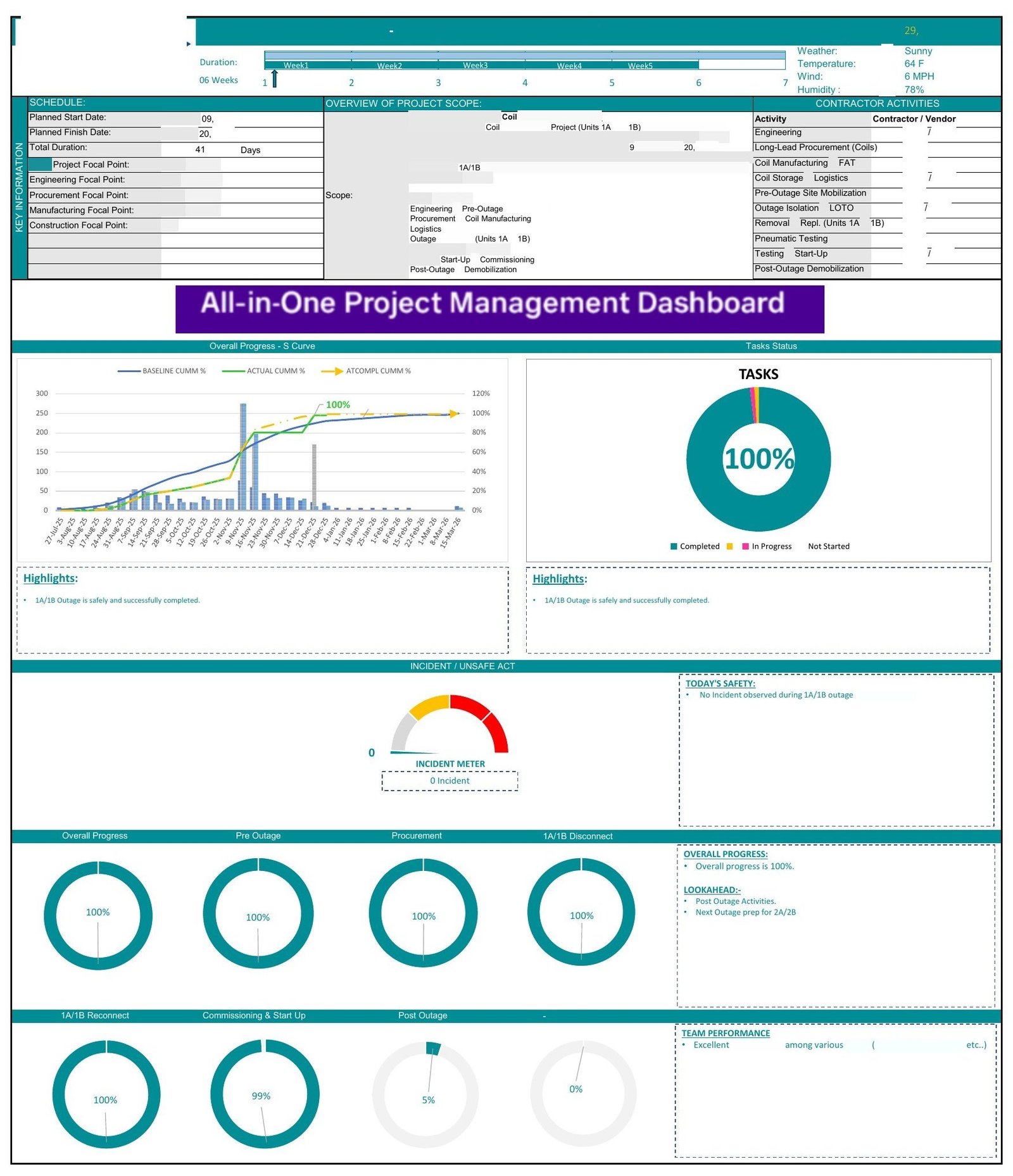
Daily progress report — client names removed
Daily progress reportPlanned vs done by shift, slips, discovery work and tomorrow’s plan.
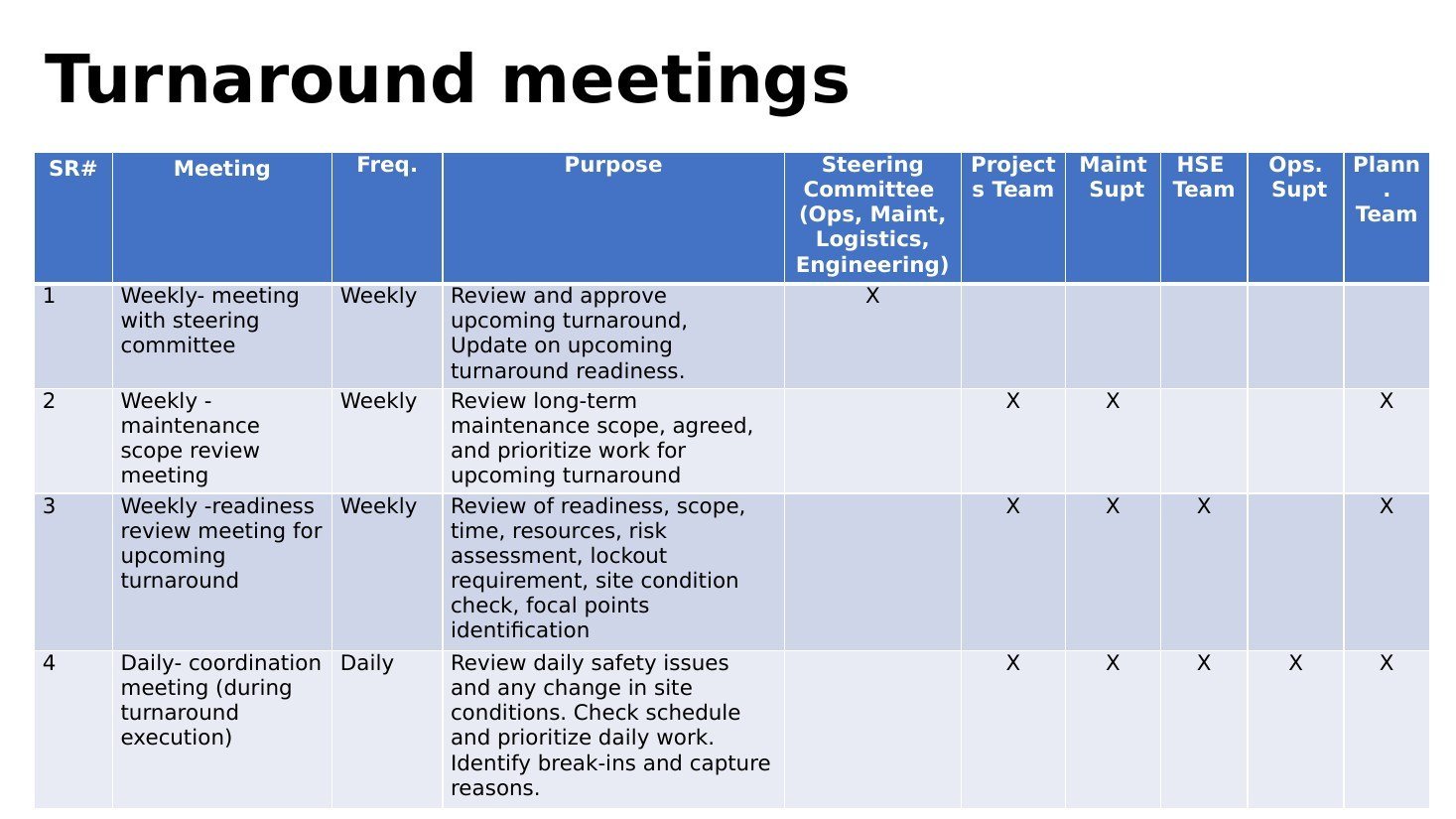
Turnaround meeting cadence — client names removed
Turnaround meeting cadenceWeekly steering, scope review and readiness meetings, then the daily coordination meeting during execution.
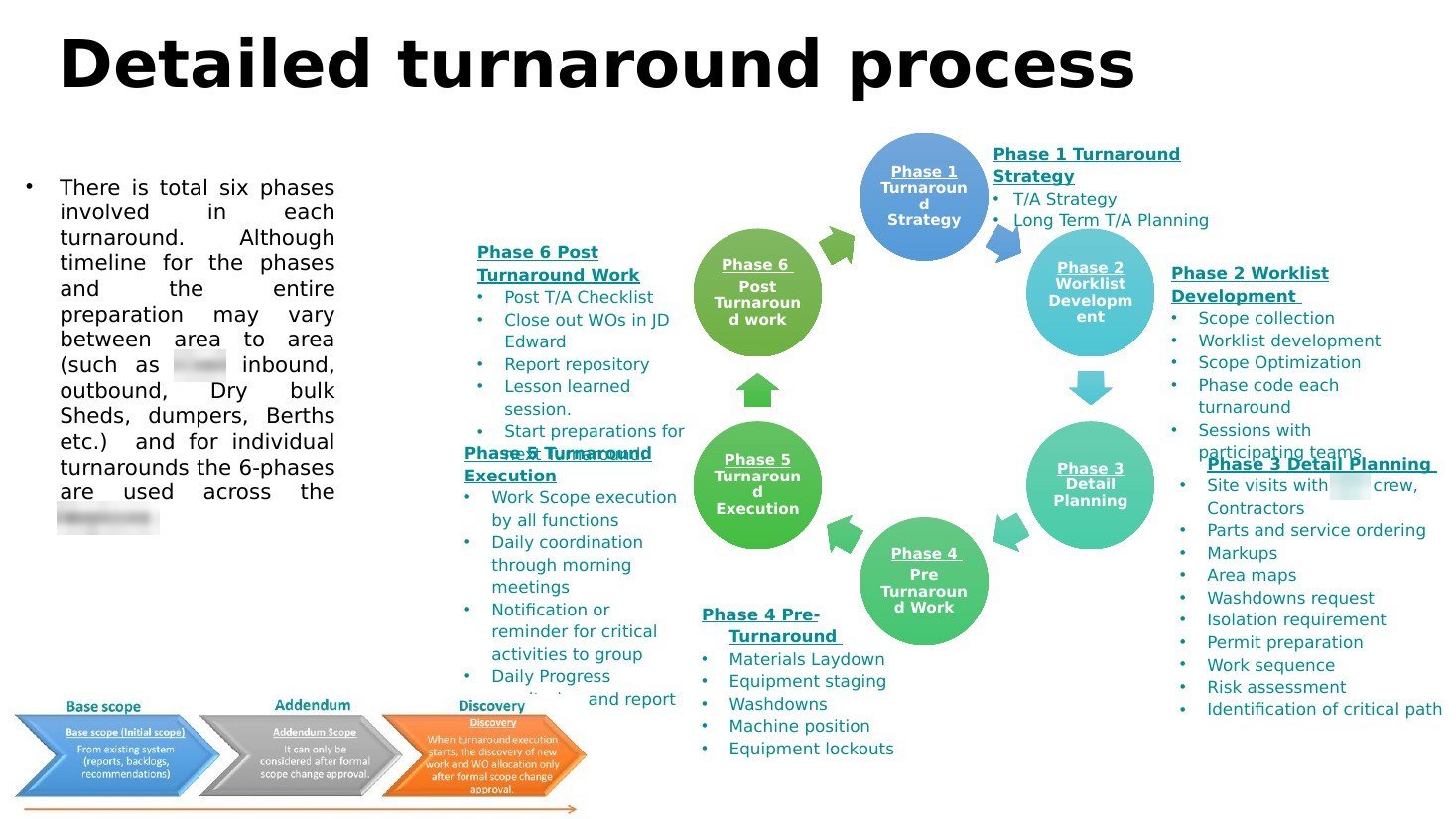
Turnaround strategy & process deck — client names removed
Turnaround strategy & process deckRoles, phases, meeting cadence and the readiness-review gates.
T-minus milestone planTemplate from T-12 months to close-out with the readiness-review gates.
Worklist & scope-challenge sheetScope register with source, justification, challenge outcome and freeze status.
Work package templateJob steps, crews, hours, isolations, permits, lifts, inspections, drawings.
P6 shutdown schedule structureWBS, codes, shift calendars and layouts for a turnaround (with practice files).
Manpower & S-curve workbookDay / night histograms, peaks and valleys, planned vs earned curves.
Daily report & dashboard packDay and night report templates and the one-page leadership dashboard.
Enroll or ask first

$199. Eight live modules. The full outage package, built by you.

Taught by our founder — P.Eng, PMP, PMI-SP, PMI-RMP, CMRP and MMP — who plans and controls outages and turnarounds for a living. Pairs with the Maintenance & Operations Planner Course, the PMI-SP exam prep add-on and Primavera P6 Essentials.

Secure checkout by Stripe. Dates are confirmed on enrolment; evening and weekend sessions available. Need the outage planned for you instead? Request an outage package.

P.Eng certificate held by our founder, name and ID number hidden
P.EngProfessional Engineer · PEGNL (Canada)
PMP certificate held by our founder, name and ID number hidden
PMPProject Management Professional · PMI
PMI-SP certificate held by our founder, name and ID number hidden
PMI-SPScheduling Professional · PMI
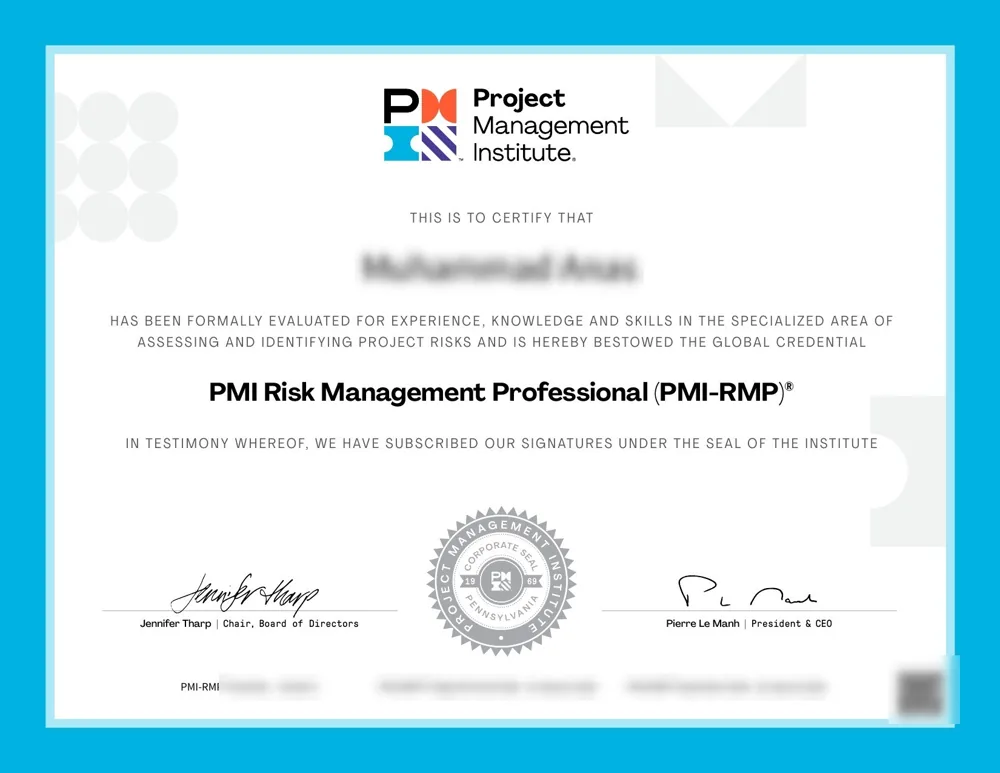
PMI-RMP certificate held by our founder, name and ID number hidden
PMI-RMPRisk Management Professional · PMI
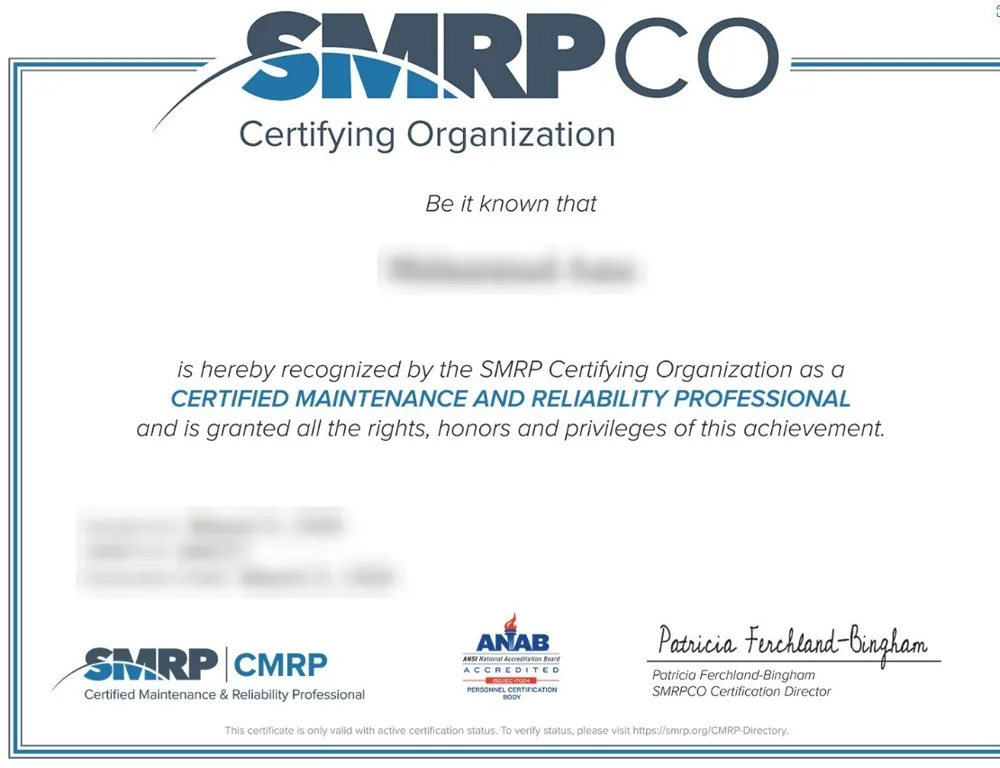
CMRP certificate held by our founder, name and ID number hidden
CMRPCertified Maintenance & Reliability Professional · SMRP
MMP certificate held by our founder, name and ID number hidden
MMPMaintenance Management Professional · PEMAC

Ask a question or reserve a seat

Goes straight to our team. We reply on WhatsApp or email within business hours (Eastern).

By sending you agree to be contacted about your request. No spam, no lists.

FAQ

Before you enroll.

Do I need Primavera P6 to take the course?

You need access to P6 or MS Project for the schedule modules — we show you how to get a practice copy and provide the practice files. The planning, work package, manpower and reporting modules are done in Excel and the templates we give you.

Is this for plant turnarounds or heavy-equipment outages?

Both. The method is the same — scope, packages, schedule, manpower, readiness, control — and the case study is a 16-day heavy-equipment outage with day and night shifts. We cover plant-specific topics (isolations, blinds, inspection scope, start-up sequencing) and terminal / mining topics (conveyors, dumpers, stackers, ship-loaders).

How is this different from the Maintenance & Operations Planner Course?

That course is the planner's weekly work: job plans, backlog, weekly schedules, kitting, single-day outages and KPIs. This one is the multi-week event: scope freeze, work packages, T-minus milestones, the P6 shutdown schedule and daily progress control. They are designed to be taken together.

Does it help with the PMI-SP exam?

The scheduling modules use PMI-SP-level practice: logic, calendars, float, resource loading and levelling, baselines and progress analysis. For the exam itself, add the PMI-SP prep add-on ($199), taught by a PMI-SP holder.

Live or recorded? On site?

Live on Zoom in small groups, recorded and shared the same day. On-site delivery for plant and contractor teams in the USA, Canada and worldwide by arrangement.

Call WhatsApp Free session